Aesthetic Medicine, Built on a Dermatologist’s Foundation
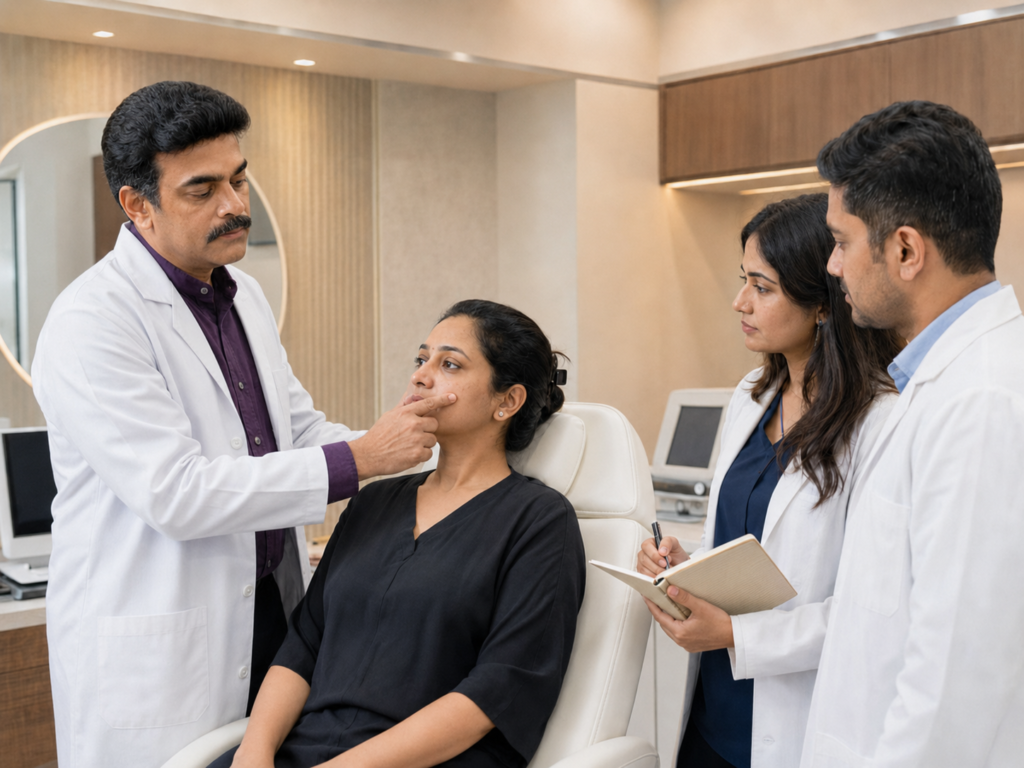
Dermatologists enter aesthetic practice with an understanding of skin biology, disease, pharmacology, healing and patient care. The next requirement is not simply exposure to more procedures. It is the ability to translate that foundation into aesthetic assessment, appropriate indication, treatment selection, sequencing, technical judgement and responsible follow-up.
The Fellowship in Aesthetic Medicine is designed around this transition. It brings the major domains of contemporary aesthetic practice into one structured learning pathway, allowing the dermatologist to consider each intervention in relation to the patient, the clinical concern, the expected benefit, the limitations of treatment and the wider treatment plan.
Beyond Isolated Procedures
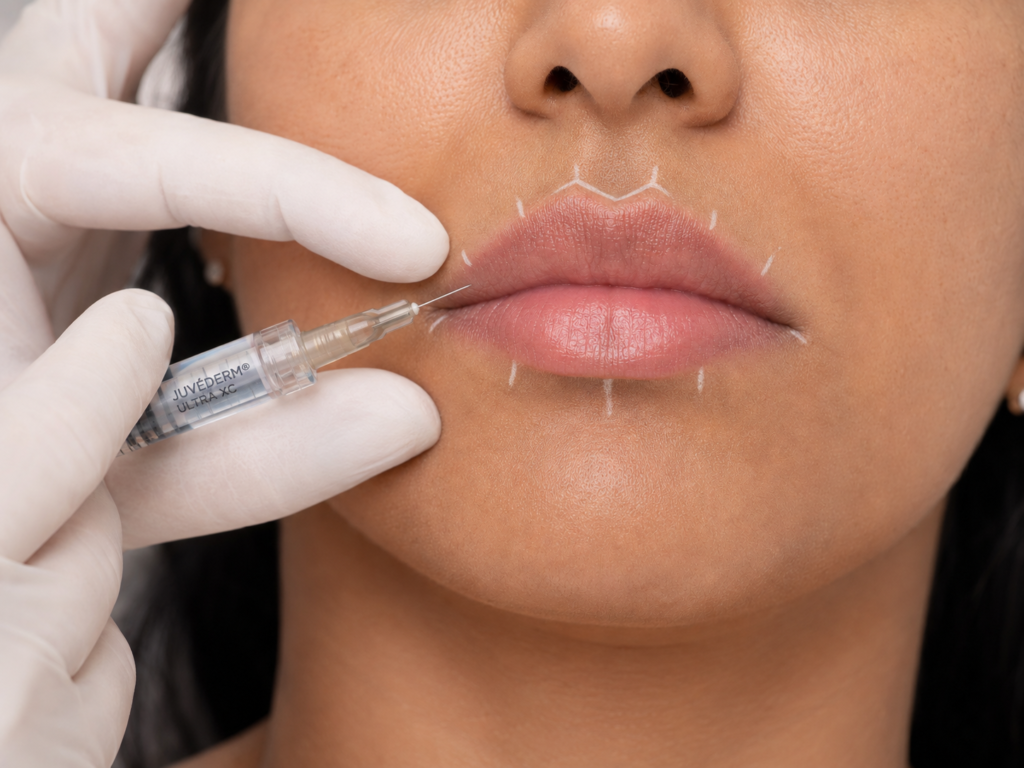
Aesthetic medicine is often encountered as a series of short demonstrations: a peel, a device, an injectable or a regenerative procedure. Yet safe and consistent practice depends on the decisions that precede and follow the technique – who should be treated, why a particular intervention is suitable, how treatments should be combined, what endpoint is appropriate and how response or complication should be reviewed.
The Fellowship is therefore planned over four to six months. Its longitudinal format connects academic teaching, observation, clinical discussion, procedural learning and review, helping the dermatologist develop an organised approach rather than an accumulation of disconnected techniques.
A Fellowship Defined by Clinical Judgement
Dermatologist-Led Academic Direction
The programme is shaped through a dermatological understanding of skin, hair, ageing, pigmentary behaviour, healing and procedural response. | Longitudinal Learning
Learning develops across several months, allowing concepts, observation, procedural understanding and review to build progressively. |
Integrated Treatment Planning
Procedures and devices are considered as parts of a coordinated patient plan rather than as isolated services. | Relevance to Indian Skin
Patient selection, pigmentary risk, treatment intensity, healing response and maintenance are examined in relation to Indian skin. |
Limited Intake
A restricted number of candidates supports meaningful faculty interaction, clinical discussion and progressive feedback. | Restraint, Safety and Complication Awareness
The programme gives equal importance to when treatment should be selected, modified, deferred or avoided. |
What the Fellowship Is Intended to Develope
The Fellowship is designed to strengthen the dermatologist’s approach to aesthetic practice across the complete patient journey:
- a more structured aesthetic consultation and clinical assessment;
- clearer patient selection, indication and contraindication reasoning;
- more considered selection, combination and sequencing of treatments;
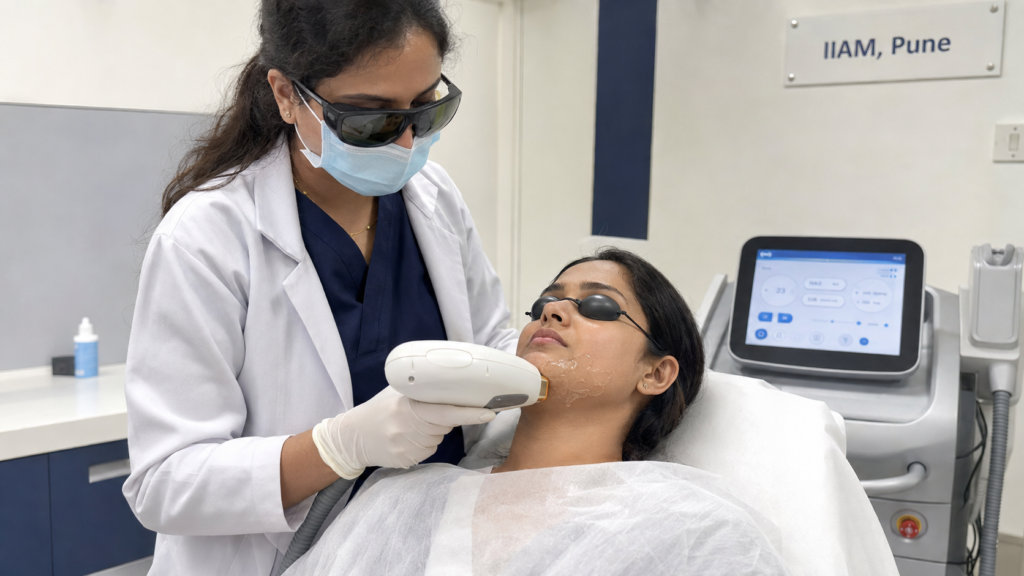
- greater understanding of device-based and procedural choices;
- stronger awareness of complications, limitations and referral thresholds;
- more disciplined consent, photography, documentation and follow-up.
Lorem ipsum dolor sit amet, consectetur adipiscing elit. Ut elit tellus, luctus nec ullamcorper mattis, pulvinar dapibus leo.
A Curriculum Organised Around Clinical Decisions
The Fellowship is not presented as a numerical catalogue of procedures. Its academic scope is organised around the knowledge and decisions required to assess a patient, select an appropriate intervention, understand technique and technology, anticipate risk and evaluate outcome.
The domains below indicate the breadth of the Fellowship. Detailed procedural coverage, the planned learning sequence and the form of exposure within each domain are shared during the admission process.
d future-focused learning experience that empowers students with both academic knowledge and practical competencies Each program is structured to combine foundational coursework specialized major subjects hands-on learning and interdisciplinary opportunities By integrating theory research and real-world applications we prepare students to excel in a rapidly evolving global environment Students begin with core courses that build essential skills in communication, critical thinking, digital literacy, and quantitative analysis.
Clinical and Practical Exposure
Clinical and practical exposure may include case discussion, demonstration, observation, assisted participation or supervised hands-on learning. Its precise nature depends on the curriculum component, participant readiness, patient suitability, informed consent, case availability and faculty judgement
Faculty Participation
Selected specialist faculty support defined areas of the Fellowship under Dr. L.K. Desai’s dermatologist-led academic direction. Faculty participation may vary according to the approved curriculum, learning requirements and programme schedule.
Individual Attention Across a Longitudinal Programme
The Fellowship is not conducted as a large, continuously enrolling classroom course. IIAM accepts a limited number of candidates so that academic teaching, clinical observation, procedural learning, discussion and review can remain connected throughout the programme.
The limited-intake model allows faculty interaction to remain meaningful and gives candidates the opportunity to examine decision-making, technique, outcomes and correction with greater continuity.
Fellowship Fees
Fellowship fees, inclusions and the applicable payment schedule are shared after the dermatologist’s qualification, professional background and programme suitability have been reviewed.
CTA: Request Fellowship Information
Scheduling and Confirmation
Fellowship schedules are planned for a limited intake and depend on candidate suitability, faculty availability and appropriate clinical-learning opportunities.
Submission of an enquiry or application does not secure admission. Participation is confirmed only after the required review, documentation and payment formalities are completed and IIAM issues written confirmation.
Certification
IIAM issues a Fellowship completion certificate subject to the stated attendance, learning, assessment, payment and professional-conduct requirements. The exact certificate title and completion conditions are communicated in writing before enrolment.
Develop a More Integrated Approach to Aesthetic Practice
Build on your dermatological foundation through a structured programme in aesthetic assessment, procedural planning, treatment integration and patient-centred clinical decision-making.